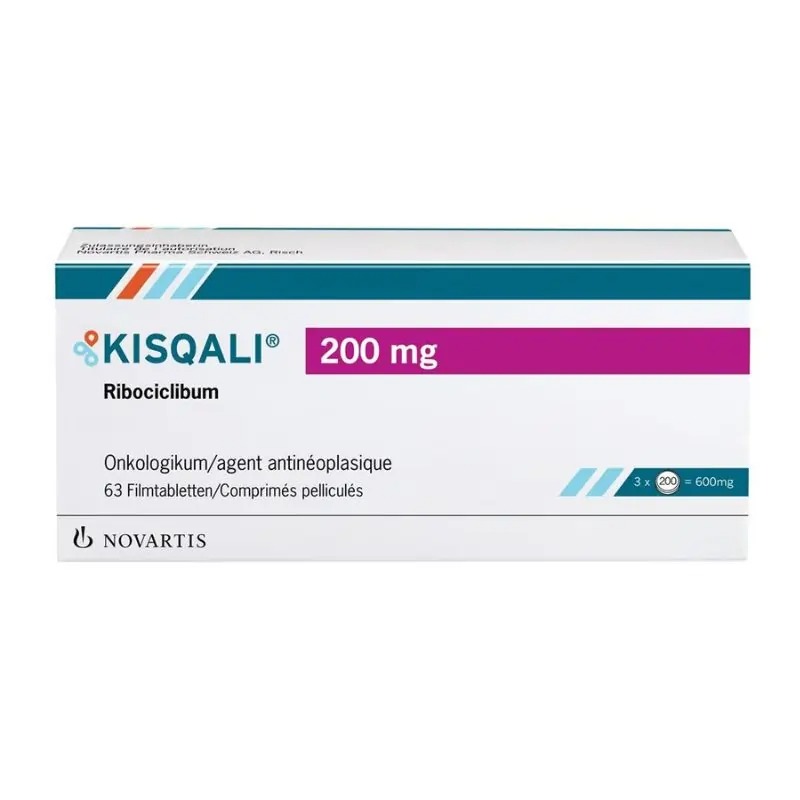
Kisqali 200mg Tab. 63`s
Kisqali (ribociclib) treats hormone receptor positive, HER2 negative breast cancer in adults.
Overview
Doctors prescribe Kisqali alongside hormone therapy to slow or stop cancer cell growth in both early and advanced stages. Order Kisqali with a valid prescription at PakMeds for reliable delivery across Pakistan.
Manufacturer | Novartis Pharma |
|---|---|
Active Ingredient(s) | Ribociclib (as ribociclib succinate) |
Strength | 200 mg |
Pack Size | 63 Tablets |
Prescription Required | Yes |
Generic Name(s) | Ribociclib |
Kisqali Ingredients and Usage
Kisqali contains ribociclib, a selective cyclin dependent kinase 4 and 6 (CDK4/6) inhibitor. CDK4 and CDK6 are enzymes that send growth signals to cancer cells, driving them to divide and multiply. Ribociclib belongs to the kinase inhibitor drug class, which targets these specific enzymes to disrupt uncontrolled cell growth.
Oncologists prescribe Kisqali for hormone receptor positive (HR+), human epidermal growth factor receptor 2 negative (HER2−) breast cancer. This includes early stage (stage II and III) breast cancer with a high risk of recurrence after surgery. It also covers advanced or metastatic breast cancer that has spread beyond the breast.
Patients always take Kisqali in combination with a hormone therapy such as an aromatase inhibitor (letrozole, anastrozole, or exemestane) or fulvestrant. Pre and perimenopausal women may also receive ovarian suppression therapy alongside Kisqali treatment.
How Does Kisqali Work?
Kisqali works by binding to the cyclin D–CDK4/6 complex inside breast cancer cells. This complex normally phosphorylates the retinoblastoma protein (pRb), which acts as a gatekeeper for cell division. When CDK4/6 phosphorylates pRb, the cell receives a green light to move from the G1 resting phase into active DNA replication.
Ribociclib blocks this phosphorylation step, keeping pRb in its active tumour suppressor state. The cancer cell remains arrested in the G1 phase and cannot proceed to replicate its DNA. This targeted mechanism slows tumour growth without the broad toxicity of traditional chemotherapy.
Patients take Kisqali once daily for 21 consecutive days, followed by 7 days off treatment, forming a 28 day cycle. The standard starting dose is 600 mg (three 200 mg tablets) taken in the morning with or without food. Only a doctor can recommend the exact dosage.
Kisqali Side Effects
Kisqali can cause a range of side effects. Most common reactions are manageable with dose adjustments or temporary treatment pauses. Patients should report any new or worsening symptoms to their oncologist promptly.
Neutropenia (low white blood cell counts), which increases infection risk and requires regular blood monitoring
Nausea, vomiting, diarrhoea, or constipation
Fatigue and general tiredness
Headache
Hair thinning or hair loss (alopecia)
Elevated liver enzymes (ALT and AST), indicating potential liver stress
Skin rash
Decreased appetite
Warnings
QT prolongation: Kisqali can cause dangerous heart rhythm changes. Doctors must perform ECG tests before and during treatment to monitor cardiac activity.
Hepatotoxicity: Ribociclib may cause serious liver damage. Regular liver function blood tests are mandatory throughout the treatment course.
Interstitial lung disease (ILD): Kisqali can trigger severe or life threatening lung inflammation. Patients must report any new cough, breathlessness, or chest symptoms immediately.
Severe skin reactions: Stevens Johnson Syndrome (SJS), Toxic Epidermal Necrolysis (TEN), and DRESS syndrome have occurred during post approval use. Patients must stop Kisqali and seek emergency care if a severe rash develops.
Pregnancy: Kisqali causes foetal harm based on animal studies. Women of childbearing potential must use effective contraception during treatment and for at least 3 weeks after the final dose.
CYP3A4 interactions: Strong CYP3A inhibitors (such as ketoconazole and ritonavir) increase ribociclib blood levels and raise the risk of QT prolongation. Patients must avoid grapefruit and grapefruit juice during treatment.
Renal impairment: Patients with severe kidney impairment require a reduced starting dose of 200 mg once daily.
Kisqali Storage Conditions
Store Kisqali at room temperature between 20°C and 25°C (68°F to 77°F). Brief temperature excursions between 15°C and 30°C are acceptable during transport. Keep the tablets in their original blister packaging to protect them from moisture, and store them away from direct sunlight. Always keep Kisqali out of the reach of children and dispose of unused tablets according to local pharmaceutical waste guidelines.
Customer Reviews
No reviews yet. Be the first to review this product!
Login to write a review