
Blood Cancer Symptoms: Early Signs of Leukemia, Lymphoma, and Myeloma
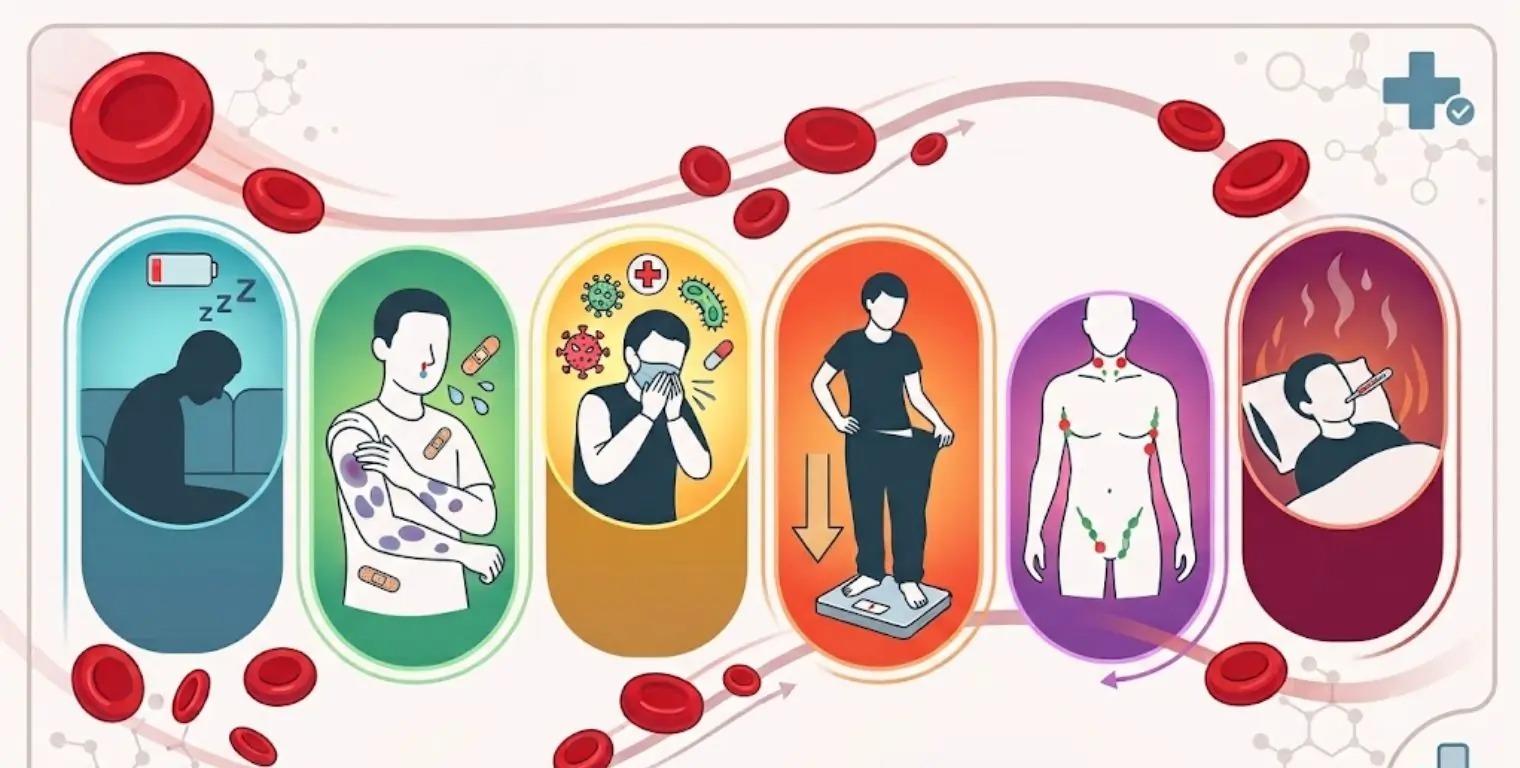
Blood cancer begins quietly, deep inside the bone marrow where the body builds red blood cells, white blood cells, and platelets. It comes in three main forms, leukemia, lymphoma, and multiple myeloma, and each one disrupts blood cell production in its own way. In the United States, someone hears the words "you have blood cancer" roughly every three minutes, according to Blood Cancer United.
What makes these cancers so easy to miss is how ordinary they feel at first. The early warning signs often read like a lingering cold, a bad flu week, or plain exhaustion, so weeks slip by before anyone thinks to look closer. Catching the pattern early gives doctors real room to act, and this guide walks through the symptoms of leukemia, lymphoma, and myeloma, plus the moment to stop waiting and see a doctor.
Blood cancer covers leukemia, lymphoma, and multiple myeloma, and each one starts in a different blood cell type.
Watch for fatigue, frequent infections, unusual bruising or bleeding, fever, and swollen lymph nodes.
Acute leukemia moves fast and needs urgent care, while chronic leukemia can stay silent for years.
Multiple myeloma tends to bring persistent bone pain in the back, ribs, or hips.
Leukemia made up about 4.2% of new cancer cases in Pakistan in 2022, ranking sixth nationwide.
A complete blood count is usually the first test doctors reach for.
Symptoms that linger past a few weeks are worth a conversation with a doctor and a simple blood test.
This article shares general health information and does not replace professional medical advice, diagnosis, or treatment. Blood cancer symptoms overlap with plenty of harmless conditions, so self-diagnosis is neither safe nor reliable. For anything touching your own symptoms, testing, or treatment, always speak with a licensed doctor, hematologist, or oncologist.
What Is Blood Cancer?
The trouble starts with a small mistake in a cell's DNA, the instruction manual that tells blood cells when to grow and when to stop. When those instructions go wrong, abnormal cells multiply and steadily crowd out the healthy ones. Little by little, the body loses its ability to fight infection, carry oxygen, and clot properly.
Each type takes a different route through the body. Leukemia starts in the white blood cells of the bone marrow and spills into the bloodstream. Lymphoma begins in lymphocytes and forms tumors in the lymph nodes as it travels the lymphatic system. Multiple myeloma targets plasma cells, the antibody makers of the immune system, as the Cleveland Clinic explains.
Blood Cancer Type | Cell of Origin | Distinct Symptom |
|---|---|---|
Leukemia | White blood cells in bone marrow | Rapid onset fatigue and frequent infections |
Lymphoma | Lymphocytes in the lymphatic system | Swollen, painless lymph nodes |
Multiple Myeloma | Plasma cells in bone marrow | Persistent bone pain in the back or hips |
Common Blood Cancer Symptoms
Leukemia, lymphoma, and myeloma often look alike early on, because all three throw normal blood cell production off balance. Some people feel nothing at all in the beginning, especially with the slow growing types. And since every symptom below can also point to something harmless, a doctor is the only one who can say for sure.
Persistent fatigue and weakness that rest never quite fixes
Frequent or severe infections as healthy white blood cells run low
Easy bruising, bleeding gums, or nosebleeds that take too long to stop
Fever or chills with no infection to explain them
Night sweats heavy enough to soak through clothing or bedding
Unexplained weight loss and a fading appetite
Swollen lymph nodes in the neck, armpit, or groin
Shortness of breath or pale skin from low red blood cell counts
Itchy skin or a rash with no obvious cause
Bone or joint pain that disturbs your sleep
As Blood Cancer UK points out, no two people follow the same script, and some notice signs that never make it onto a standard list. The rule of thumb is simple: anything that lingers without a clear reason is worth checking.
Leukemia Symptoms
Doctors sort leukemia into acute and chronic forms based on how quickly it moves. Acute leukemia is the most common cancer in children, while the chronic types tend to show up in adults over 65. That difference in speed shapes how symptoms arrive.
Acute Leukemia Symptoms
Acute leukemia cells divide fast, so most people feel genuinely unwell within weeks of the disease taking hold. The tell tale signs are sudden fatigue, high fever, back to back infections, and easy bruising or bleeding. Both acute myeloid leukemia (AML) and acute lymphoblastic leukemia (ALL) call for treatment the moment they are diagnosed.
Chronic Leukemia Symptoms
Chronic lymphocytic leukemia (CLL) and chronic myeloid leukemia (CML) often creep along for years without a whisper. When they finally announce themselves, it tends to be through mild fatigue, quiet weight loss, and swollen lymph nodes. More often than not, a routine blood test catches chronic leukemia before the person feels a thing, as the Mayo Clinic notes.
Lymphoma Symptoms
The classic sign of lymphoma is a painless swelling in the lymph nodes of the neck, underarm, or groin. Alongside it, people often report stubborn fevers, drenching night sweats, and weight that slips away without trying. If abnormal cells gather in the spleen, a bloated or uncomfortable belly can join the picture.
Lymphoma splits into two broad families, Hodgkin and non-Hodgkin lymphoma, and together they span more than 70 subtypes. Diffuse large B-cell lymphoma is the non-Hodgkin type doctors see most. Before comparing lymphoma treatment options, though, the first step is always a firm diagnosis from a licensed oncologist.
Multiple Myeloma Symptoms
Multiple myeloma announces itself most often through bone pain in the back, ribs, or hips, paired with the deep tiredness of anemia. As the abnormal plasma cells pile up, they can trigger kidney trouble, high blood calcium, and a weakened immune system. Some cases are indolent, sitting silently until they turn active.
Repeated infections and bones that fracture too easily are two more red flags worth taking seriously. Anyone weighing multiple myeloma treatment should settle every dosing and drug decision with their treating hematologist first.
Blood Cancer in Pakistan
In Pakistan, leukemia ranked as the sixth most common cancer in 2022, making up roughly 4.2% of new cases, according to GLOBOCAN data from the WHO. Non-Hodgkin lymphoma trailed close behind at 3.9% of new cases that year. A national registry review spanning 1994 to 2021 placed leukemia among the country's five most prevalent cancers across every age group.
The weight falls especially hard on children. A 1994 to 2021 registry study found acute lymphoblastic leukemia was the second most common childhood cancer at 19.8% of pediatric cases, just behind Hodgkin lymphoma. Too few specialist hematologists and too little public awareness still push diagnoses later than they should be.
How Blood Cancer Is Diagnosed
Almost every diagnosis starts with a complete blood count (CBC), a simple test that flags unusual levels of white cells, red cells, or platelets. When something looks off, doctors usually follow up with a bone marrow biopsy or a lymph node biopsy to pin down the exact type. Blood chemistry tests can add another layer, checking calcium and the proteins tied to myeloma.
Imaging has its place too, spotting an enlarged spleen or swollen nodes, though leukemia rarely forms a tumor a scan can catch. If fatigue and pale skin are showing up together, it is worth reviewing your anemia related blood work with a doctor.
Blood Cancer Treatment Options
No two treatment plans look quite the same, because so much depends on the cancer type, the patient's age, and how fast the disease is moving. The main tools are chemotherapy, targeted therapy, immunotherapy, and stem cell transplantation. Tyrosine kinase inhibitors have become a mainstay for chronic myeloid leukemia and some cases of acute lymphoblastic leukemia.
A stem cell transplant rebuilds healthy blood forming cells after high dose chemotherapy has cleared the bone marrow. Newer still, CAR T-cell therapy turns the immune system loose on certain relapsed leukemias and lymphomas. Whatever the plan, authentic chemotherapy medicines and supportive hematology medicines should always come from a verified pharmacy, never a questionable source.
Questions to Ask Your Doctor
A diagnosis brings a flood of questions, and jotting them down before an appointment helps you get real answers. The American Cancer Society suggests starting with the exact cell type and whether the cancer is fast or slow growing. From there, it helps to ask which treatments fit your case and what side effects to expect.
What type of blood cancer do I have, and which cell type did it start in?
Is this a fast growing or slow growing cancer?
What treatment options fit my case, and what side effects come with them?
Will I need a bone marrow or stem cell transplant?
How will treatment reshape my daily life and work?
Are there clinical trials I should know about?
FAQs on Blood Cancer Signs
What is the first sign of blood cancer?
Persistent fatigue is usually the first thing people notice, since it traces back to a shortage of healthy red blood cells. Frequent infections and easy bruising often turn up early too. Because the signs shift from one type to another, a blood test is still the only way to know for sure.
Can blood cancer be cured?
Many blood cancers respond well to treatment, and survival has climbed sharply over the last forty years. The five year survival rate for leukemia has quadrupled in that time, per Cleveland Clinic data. That said, the outlook still hinges on the exact subtype, the stage, and how early treatment begins.
Is blood cancer hereditary?
Most people who receive a diagnosis have no family history at all. A relative with the disease can nudge the risk up slightly for certain subtypes, but it is rarely the main driver. Age, smoking, and past radiation or chemotherapy carry far more weight.
How is leukemia different from lymphoma?
Leukemia starts in the bone marrow and flows into the bloodstream, rarely forming a solid lump. Lymphoma starts in the lymphatic system and usually builds tumors in the lymph nodes. Both involve white blood cells, but they take different paths through the body.
What blood test detects blood cancer?
The complete blood count is the standard starting point, measuring red cells, white cells, and platelets. Unusual results typically lead to a bone marrow biopsy for a firm diagnosis. Blood chemistry tests can also flag the proteins linked to multiple myeloma.
Is blood cancer common in children in Pakistan?
Leukemia sits among the leading childhood cancers in Pakistan, according to national registry data. Acute lymphoblastic leukemia alone accounts for close to a fifth of pediatric diagnoses. Seeing a pediatric hematologist early makes a real difference to how treatment goes.
Can blood cancer symptoms be mistaken for something else?
Absolutely, and that is exactly what makes them tricky. Early signs mirror the flu, seasonal allergies, or the plain fatigue of a stressful stretch, and mild fever with swollen glands fits a dozen minor illnesses. If symptoms hang on past two or three weeks, ask for blood work, and some people even mistake vitamin B12 deficiency for cancer.
Bottom Line on Blood Cancer Symptoms
Persistent fatigue, frequent infections, easy bleeding, and swollen lymph nodes are the body's way of asking for attention, so it pays to listen. A single blood test, caught early, can genuinely change how treatment for leukemia, lymphoma, or myeloma unfolds. If several of these signs have stuck around for more than a few weeks, booking bloodwork with a doctor is the smartest next move.
PakMeds carries a broad range of authentic oncology medicines sourced straight from licensed manufacturers, delivered nationwide across Pakistan. Patients with a valid prescription can also use instant order to get their treatment medicines without the wait.