
No products in the cart.
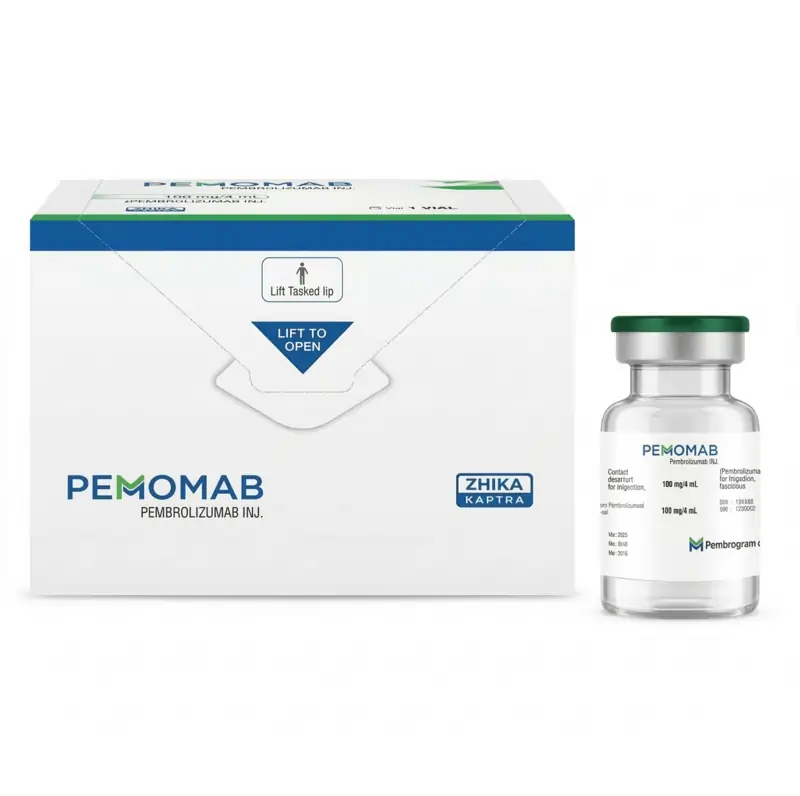
Pemomab (Ziska Pharma)
Buy Pemomab (Pembroluzimab) a crtical cancer medication online at PakMeds. We offer the most affordable with nationwide delivery.
₨ 180,000
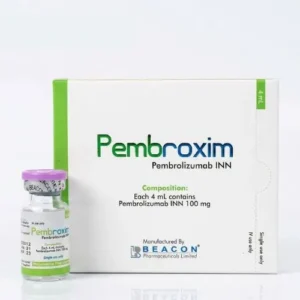
Pemomab by Ziska Pharma is a prescription cancer immunotherapy injection and an affordable biosimilar alternative to the originator brand Keytruda by Merck Sharp & Dohme Corp. It treats over 12 cancer types including melanoma, non-small cell lung cancer, cervical cancer, and classical Hodgkin lymphoma via slow intravenous infusion. Order Pemomab at PakMeds with a valid oncologist prescription.
| Product Name | Pemomab |
|---|---|
| Manufacturer | Ziska Pharma Ltd., Bangladesh |
| Generic Name | Pembrolizumab |
| Active Ingredient | Pembrolizumab (humanized monoclonal IgG4 kappa antibody) |
| Originator Brand | Keytruda by Merck Sharp & Dohme Corp |
| Formulation | Solution for Intravenous Infusion |
| Pack Size | 1 Vial |
| Prescription Required | Yes |
Pemomab Ingredients and Usage
Pemomab contains Pembrolizumab, a humanized monoclonal IgG4 kappa antibody with an approximate molecular weight of 149 kDa. It belongs to the drug class of PD-1 inhibitors, a subset of immune checkpoint inhibitors that restore the immune system’s ability to detect and destroy cancer cells. The active ingredient is produced in recombinant Chinese hamster ovary (CHO) cells under pharmaceutical-grade biomanufacturing conditions.
Ziska Pharma’s Pemomab carries the same indications as its originator Keytruda and is used to treat a broad range of advanced and metastatic cancers. Approved indications include unresectable or metastatic melanoma, cutaneous squamous cell carcinoma, Merkel cell carcinoma, non-small cell lung cancer (NSCLC), head and neck squamous cell carcinoma (HNSCC), classical Hodgkin lymphoma, primary mediastinal B-cell lymphoma, urothelial bladder cancer, microsatellite instability high (MSI-H) or mismatch repair deficient solid tumors, colorectal cancer, gastric and gastroesophageal junction cancer, esophageal cancer, cervical cancer, hepatocellular liver cancer, renal cell kidney cancer, and triple-negative breast cancer.
Pemomab is administered as a slow intravenous infusion over 30 minutes, given once every 3 weeks or once every 6 weeks depending on the cancer type and the oncologist’s prescribed protocol.
How Does Pemomab Work?
PD-1 (programmed death receptor 1) is an immune checkpoint protein found on T-cells — the immune cells responsible for identifying and eliminating threats including cancer. Cancer cells evade destruction by overexpressing PD-L1 and PD-L2 ligands, which bind to the PD-1 receptor on T-cells and trigger a suppressive signal that instructs T-cells to stand down. This mechanism allows tumors to grow without immune resistance.
Pemomab binds directly and selectively to the PD-1 receptor on T-cells, physically blocking PD-L1 and PD-L2 from attaching. This removes the suppressive brake on the T-cell, restoring its capacity to recognize tumor antigens and mount a targeted cytotoxic response against cancer cells. The drug promotes T-cell proliferation, increases cytokine production, and prevents the metabolic exhaustion that cancer-driven PD-1 signalling typically induces in immune cells.
Clinical data from KEYNOTE trials for the originator Pembrolizumab demonstrated a twelve-month survival rate of 74.1% in advanced melanoma patients, versus 58.2% for the prior standard of care ipilimumab. In NSCLC patients with PD-L1 tumour proportion scores above 50%, Pembrolizumab extended median overall survival to 17.3 months compared to 8.2 months for docetaxel chemotherapy. In 2017 the FDA designated Pembrolizumab the first tissue-agnostic oncology drug, approving it based on a tumour’s genetic characteristics rather than its tissue of origin.
Pemomab Side Effects
Pemomab activates the immune system systemically. This can cause it to act against healthy organs and tissues in addition to tumour cells, producing immune-mediated adverse reactions that range from mild to life-threatening. The most commonly reported side effects from clinical trials of Pembrolizumab as a single agent are listed below.
- Fatigue and generalised weakness
- Musculoskeletal pain including joint and muscle aches
- Skin rash, pruritus (itching), and redness
- Diarrhoea, nausea, vomiting, and abdominal pain
- Decreased appetite and unintended weight loss
- Constipation
- Fever (pyrexia)
- Persistent cough and dyspnoea (shortness of breath)
- Hypothyroidism — reduced thyroid hormone output, detected by blood test
- Elevated liver enzymes indicating immune-mediated hepatitis
- Low blood sodium and abnormal kidney function test results
- Infusion reactions: chills, flushing, fever, hypotension, or wheezing during administration
- Elevated blood glucose including new onset or worsening diabetes
Warnings
- Severe immune-mediated reactions: Pemomab can trigger serious or fatal inflammation in the lungs (pneumonitis), colon (colitis), liver (hepatitis), kidneys (nephritis), pituitary gland (hypophysitis), thyroid gland, and adrenal glands. These reactions can occur during treatment or weeks after the final dose. All patients require regular blood, liver, kidney, and thyroid function monitoring throughout the treatment course.
- Infusion reactions: Serious and potentially life-threatening infusion reactions can occur during intravenous administration. Clinical staff must be prepared to slow or stop the infusion and manage reactions promptly. Patients must not self-administer this medicine outside a supervised clinical setting.
- Pregnancy: Pemomab can cause fetal harm, including increased risk of miscarriage and stillbirth, by disrupting PD-L1 mediated immune tolerance to the fetus. Women of childbearing potential must use effective contraception during treatment and for 4 months after the last dose. A negative pregnancy test is required before beginning therapy.
- Breastfeeding: Breastfeeding is contraindicated during treatment and for 4 months following the final dose due to the risk of serious adverse reactions in the nursing infant.
- Drug interaction — thalidomide analogues: Pemomab must not be combined with lenalidomide, pomalidomide, or thalidomide. Increased mortality has been reported in multiple myeloma patients receiving Pembrolizumab alongside these agents and dexamethasone.
- Organ transplant and stem cell transplant patients: This medicine significantly raises the risk of organ rejection in transplant recipients. Patients who have undergone or are planned for allogeneic haematopoietic stem cell transplant face a risk of severe graft-versus-host disease (GVHD), including hepatic veno-occlusive disease. The benefit-risk profile must be assessed carefully before initiating treatment in this population.
- Pre-existing autoimmune conditions: Patients with Crohn’s disease, ulcerative colitis, lupus, myasthenia gravis, Guillain-Barré syndrome, or any other autoimmune condition must disclose this to their oncologist before receiving Pemomab, as treatment may substantially worsen these conditions.
- Elderly patients: Patients aged 65 and above may experience side effects with greater severity. Dose monitoring and closer clinical follow-up are recommended in this age group.
- Prescription only: Pemomab is a specialist oncology medicine available on prescription only. It must be prescribed by a qualified oncologist and administered by trained healthcare personnel in a clinical or hospital environment.
Pemomab Storage Conditions
Store Pemomab vials under refrigeration at 2°C to 8°C (36°F to 46°F). Do not freeze and do not shake the vials, as mechanical agitation degrades the monoclonal antibody structure. Keep vials in the original carton and protect them from direct light until the moment of use.
Once diluted for intravenous infusion, the prepared solution is stable at room temperature up to 25°C (77°F) for a maximum of 6 hours, or refrigerated at 2°C to 8°C for up to 24 hours from the time of preparation. The diluted solution must be used within these windows and any remainder discarded — Pemomab is a single-use, preservative-free product and partially used vials must not be stored for reuse. Keep all vials out of reach of children and away from direct heat sources at all times.
Reviews
There are no reviews yet.
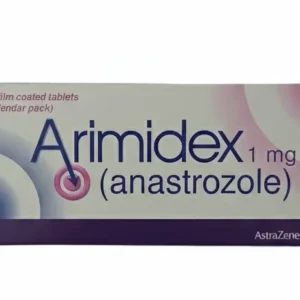
Arimidex 1mg (28 Tablets)
Original price was: ₨ 12,736.₨ 8,500Current price is: ₨ 8,500.
(0 customer reviews)