
No products in the cart.
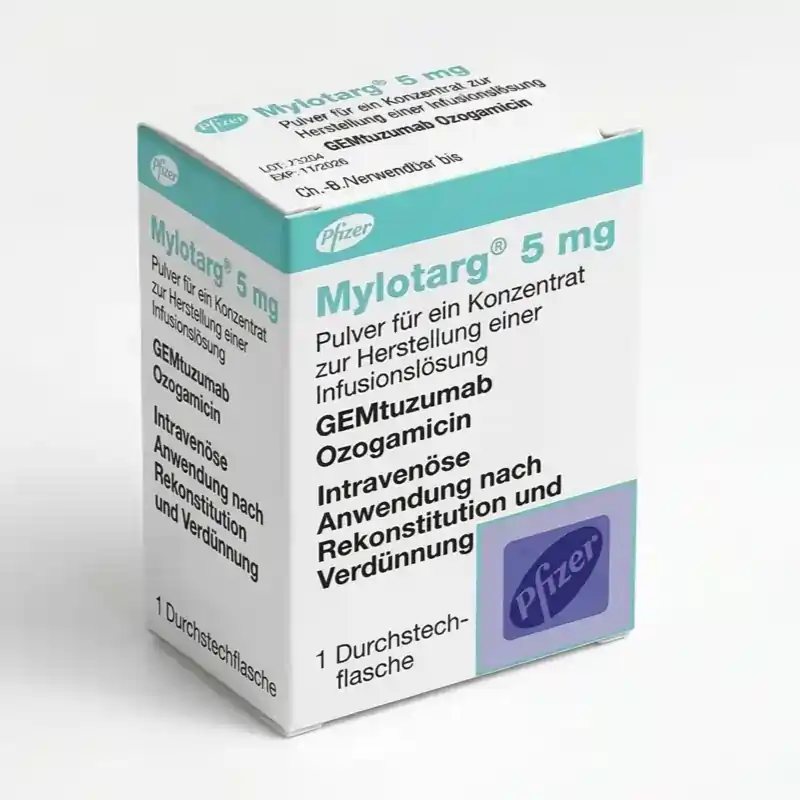
Mylotarg 5mg (Gemtuzumab Ozogamicin)
Mylotarg (Gemtuzumab Ozogamicin) 5mg is a high-efficiency medication for acute Myeloid Leukemia. Buy Mylotarg online at PakMeds with a valid prescription.
₨ 1,350,000
Mylotarg is a prescription antibody-drug conjugate (ADC) containing Gemtuzumab Ozogamicin, indicated for the treatment of CD33-positive acute myeloid leukemia (AML) in adults and in eligible paediatric patients. Manufactured by Wyeth Pharmaceuticals LLC, a subsidiary of Pfizer Inc., Mylotarg was originally FDA-approved in 2000 and re-approved in September 2017 following positive Phase 3 trial data. Order Mylotarg at PakMeds with a valid oncologist prescription.
| Product Name | Mylotarg |
|---|---|
| Manufacturer | Wyeth Pharmaceuticals LLC, a subsidiary of Pfizer Inc. (Philadelphia, PA, USA) |
| Active Ingredient | Gemtuzumab Ozogamicin |
| Strength | 4.5 mg per single-dose vial (nominal 5 mg) |
| Formulation | Lyophilised powder for reconstitution and intravenous infusion |
| Pack Size | 1 Single-Dose Vial |
| FDA Approval | Originally 2000; re-approved September 2017 |
| Prescription Required | Yes |
| Generic Name | Gemtuzumab Ozogamicin |
Mylotarg Ingredients and Usage
Mylotarg contains Gemtuzumab Ozogamicin, a CD33-directed antibody-drug conjugate (ADC). It belongs to the drug class of targeted cytotoxic antineoplastics. The antibody component (hP67.6) is a recombinant humanized IgG4 kappa monoclonal antibody produced in NS0 mammalian cell culture. It is covalently linked to N-acetyl gamma calicheamicin, a potent cytotoxic antitumour antibiotic, via a hydrolysable bifunctional linker. Each vial delivers 4.5 mg of Gemtuzumab Ozogamicin after reconstitution with 5 mL of Sterile Water for Injection to yield a 1 mg/mL solution.
Mylotarg is indicated for two distinct patient populations. First, it treats newly diagnosed CD33-positive acute myeloid leukemia (AML) in adults and in paediatric patients aged 1 month and older, in combination with daunorubicin and cytarabine chemotherapy. Second, Mylotarg treats relapsed or refractory CD33-positive AML in adults and in paediatric patients aged 2 years and older, as a single agent or as part of a combination regimen. CD33 is a cell surface antigen expressed on the leukaemic blast cells of approximately 80 to 90% of AML patients, making it a clinically validated therapeutic target for antibody-drug conjugate delivery.
Mylotarg is administered as an intravenous infusion over 2 hours. Dosing is weight-based and calculated from body surface area. Premedication with acetaminophen 650 mg orally, diphenhydramine 50 mg orally or intravenously, and methylprednisolone 1 mg/kg (or an equivalent corticosteroid) must be given 1 hour and 30 minutes before each infusion respectively to reduce the risk of infusion reactions. The intravenous bag must be protected from light with a light-blocking cover during the entire infusion.
How Does Mylotarg Work?
Mylotarg uses a two-stage targeting and kill mechanism unique to antibody-drug conjugates. In the first stage, the hP67.6 antibody component of Mylotarg binds with high specificity to the CD33 antigen expressed on the surface of leukaemic blast cells. This binding triggers receptor-mediated endocytosis, causing the entire ADC-CD33 complex to be drawn inside the cancer cell.
Once inside the cell, the acidic intracellular environment hydrolyses the bifunctional linker, releasing the cytotoxic payload N-acetyl gamma calicheamicin dimethyl hydrazide in its active form. Calicheamicin then binds to the minor groove of the cell’s DNA and induces double-strand DNA breaks. These breaks trigger cell cycle arrest and programme the leukaemic cell to undergo apoptosis (cell death). Because the calicheamicin payload is released specifically inside CD33-expressing tumour cells, Mylotarg delivers its cytotoxic effect in a targeted manner that differs fundamentally from conventional systemic chemotherapy.
Near maximal peripheral CD33 saturation has been observed at Gemtuzumab Ozogamicin doses of 2 mg/m2 and above. In the Phase 3 ALFA-0701 trial, the addition of Mylotarg to standard induction chemotherapy significantly improved event-free survival in adults with newly diagnosed AML compared to chemotherapy alone.
Mylotarg Side Effects
Mylotarg causes severe myelosuppression at recommended doses and carries an FDA Boxed Warning for life-threatening hepatotoxicity, including veno-occlusive disease. The most commonly reported adverse reactions from clinical trials, occurring in more than 15% of patients, are listed below.
- Haemorrhage and bleeding events — all grade bleeding was reported in 90% of patients in ALFA-0701; Grade 3 to 4 bleeding in 21% of patients
- Infection and febrile neutropenia, including serious and potentially fatal bacterial and fungal infections
- Fever (pyrexia) and chills
- Nausea and vomiting
- Constipation and diarrhoea
- Headache
- Elevated liver enzymes — increased AST and ALT indicating hepatocellular stress
- Mucositis and stomatitis (mouth ulcers and inflammation)
- Skin rash and erythema
- Decreased appetite
- Fatigue and generalised weakness
- Thrombocytopenia — critically low platelet counts causing prolonged bleeding risk
- Neutropenia — Grade 3 to 4 neutropenia was reported in 98% of patients in the RECOURSE registry
- Hypotension, hypertension, and tachycardia during or following infusion
- Hypoxia and respiratory difficulties
- Hyperglycaemia (elevated blood glucose)
Warnings
- BLACK BOX WARNING — Hepatic veno-occlusive disease (VOD): Mylotarg carries an FDA Boxed Warning for severe or fatal hepatotoxicity, specifically hepatic veno-occlusive disease (VOD), also known as sinusoidal obstruction syndrome (SOS). VOD occurs when small blood vessels inside the liver become blocked, causing liver damage. Symptoms include rapid weight gain, right upper quadrant abdominal pain, hepatomegaly, ascites, and elevated bilirubin. VOD was reported in 5% of adult patients in the ALFA-0701 trial and in up to 10.2% of patients in a post-marketing registry. Patients with a prior or subsequent haematopoietic stem cell transplant (HSCT) face a significantly higher VOD risk. Mylotarg must be permanently discontinued if VOD occurs.
- Infusion-related reactions including anaphylaxis: Life-threatening and fatal infusion-related reactions can occur during Mylotarg infusion or within 24 hours following it. Signs include fever, chills, hypotension, tachycardia, hypoxia, dyspnoea, bronchospasm, and respiratory failure. Mandatory premedication with acetaminophen, diphenhydramine, and a corticosteroid must be given before each dose. Vital signs must be monitored throughout the infusion. Mylotarg must be permanently discontinued if anaphylaxis or severe respiratory compromise occurs.
- Contraindication — hypersensitivity: Mylotarg is contraindicated in patients with a known hypersensitivity to Gemtuzumab Ozogamicin or to any component of the formulation. Prior reactions have included anaphylaxis.
- Severe myelosuppression and haemorrhage: Mylotarg causes severe and prolonged suppression of bone marrow function at recommended doses. Critically low platelet counts can cause life-threatening or fatal haemorrhage. Blood counts must be monitored before each dose and more frequently as clinically indicated throughout treatment.
- Tumour lysis syndrome: Patients with high peripheral blast counts or hyperleukocytosis (white cell count above 30 Gi/L) are at significant risk of tumour lysis syndrome following Mylotarg administration, which can lead to renal failure. Cytoreduction with hydroxyurea or leukapheresis is recommended before administering Mylotarg in these patients. Adequate hydration and prophylactic uric acid lowering therapy must be in place.
- QTc interval prolongation: Mylotarg prolongs the QTc interval and must be used with extreme caution in combination with other medicines known to prolong the QT interval, including ondansetron, osimertinib, and adagrasib. Concomitant use with these agents should be avoided where possible, or cardiac monitoring intensified.
- Pregnancy — women: Mylotarg can cause embryo-fetal toxicity, including structural abnormalities and growth impairment, at maternal exposures as low as 0.4 times the maximum recommended clinical dose based on AUC. Females of reproductive potential must use effective contraception during treatment and for at least 6 months after the final dose. A pregnancy test must be performed before initiating therapy.
- Pregnancy — men: Male patients with female partners of reproductive potential must use effective contraception during treatment with Mylotarg and for at least 3 months after the final dose.
- Breastfeeding: Women must not breastfeed during Mylotarg treatment or for at least 1 month after the final dose. The risk of serious adverse reactions in a breastfed infant is considered clinically significant.
- Palifermin interaction: Palifermin must not be administered within 24 hours before, during, or within 24 hours after Mylotarg infusion. Coadministration increases the severity and duration of mucositis.
- Live vaccines: Mylotarg reduces immune system activity. Live vaccines must not be administered during Mylotarg treatment. Household members of patients receiving Mylotarg should not receive the oral polio vaccine, as there is a risk of viral transmission to the immunocompromised patient.
- Cytotoxic handling: Mylotarg is a cytotoxic drug. All applicable special handling and disposal procedures for cytotoxic medicines must be followed by healthcare personnel during preparation and administration. Do not mix Mylotarg with or co-administer it alongside any other medicinal product in the same infusion line.
Mylotarg Storage Conditions
Store unreconstituted Mylotarg vials under refrigeration at 2°C to 8°C (36°F to 46°F). Keep vials in the original carton at all times to protect them from light — Mylotarg is highly light-sensitive and photodegradation of the calicheamicin payload can compromise its potency. Do not freeze the vials.
Once reconstituted, Mylotarg must be further diluted for infusion promptly and the intravenous infusion bag must be protected with a light-blocking cover throughout the preparation and administration process. The reconstituted and diluted solution should be used immediately following preparation. Mylotarg is supplied as a single-dose, preservative-free vial — any unused portion must be discarded and must not be stored for reuse. Follow all applicable cytotoxic waste disposal procedures as directed by your hospital pharmacist or oncology team.
Reviews
There are no reviews yet.
Arimidex 1mg (28 Tablets)
Original price was: ₨ 12,736.₨ 8,500Current price is: ₨ 8,500.
(0 customer reviews)