
No products in the cart.
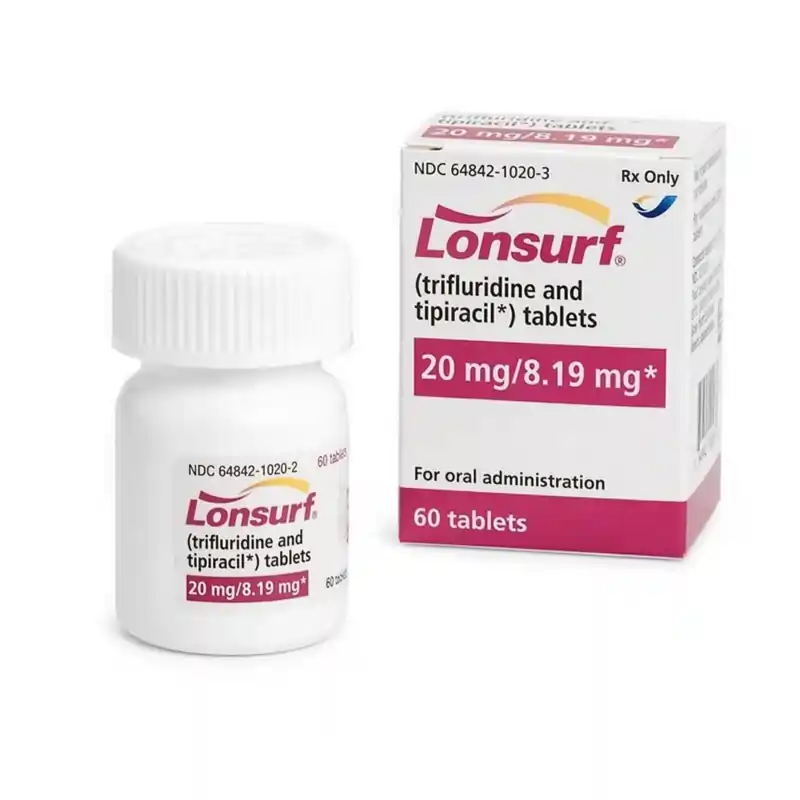
Lonsurf (Trifluridine and Tipiracil)
Lonsurf is a crucial chemotheraphy and oncology medication. Buy Lonsurf online at the most affordable prices with PakMeds.
₨ 300,000
Lonsurf is a prescription oral combination chemotherapy tablet containing Trifluridine and Tipiracil, indicated for adults with metastatic colorectal cancer and metastatic gastric or gastroesophageal junction adenocarcinoma who have progressed after prior chemotherapy regimens. First approved by the FDA on February 23, 2015, Lonsurf may be used as a single agent or in combination with bevacizumab for eligible patients. Order Lonsurf at PakMeds with a valid oncologist prescription.
| Product Name | Lonsurf |
|---|---|
| Manufacturer | Taiho Oncology, Inc. (Princeton, NJ, USA) |
| Active Ingredients | Trifluridine and Tipiracil Hydrochloride |
| Available Strengths | 15 mg / 6.14 mg and 20 mg / 8.19 mg film-coated tablets |
| Formulation | Oral Film-Coated Tablet |
| FDA Approval Date | February 23, 2015 |
| Prescription Required | Yes |
| Generic Names | Trifluridine and Tipiracil |
Lonsurf Ingredients and Usage
Lonsurf contains two distinct anti-cancer agents combined in a fixed ratio of 1:0.5 (molar). Trifluridine is a thymidine-based nucleoside analogue that incorporates into DNA and disrupts DNA synthesis in rapidly dividing cancer cells. Tipiracil is an inhibitor of thymidine phosphorylase, the enzyme responsible for breaking down Trifluridine; its role is to stabilize Trifluridine plasma concentrations and prolong its anti-tumour activity. Both agents belong to the drug class of cytotoxic antineoplastics.
Lonsurf is indicated for two cancer types. First, it treats adults with metastatic colorectal cancer previously treated with fluoropyrimidine, oxaliplatin, and irinotecan-based chemotherapy, an anti-VEGF biological therapy, and if RAS wild-type, an anti-EGFR therapy. In this setting Lonsurf may be used as a single agent or in combination with bevacizumab. Second, Lonsurf treats adults with metastatic gastric or gastroesophageal junction adenocarcinoma previously treated with at least two prior chemotherapy regimens including a fluoropyrimidine, a platinum, either a taxane or irinotecan, and if appropriate, HER2/neu-targeted therapy.
The recommended dose is 35 mg/m2 per dose, calculated from the patient’s body surface area using height and weight, and rounded to the nearest 5 mg increment. Lonsurf is taken orally twice daily — within 1 hour of completing the morning and evening meals — on Days 1 through 5 and Days 8 through 12 of each 28-day treatment cycle. The tablet must be swallowed whole and must not be crushed, chewed, or broken.
How Does Lonsurf Work?
Trifluridine, the primary cytotoxic component of Lonsurf, exerts its anti-cancer effect by incorporating directly into DNA strands inside tumour cells. Once incorporated, Trifluridine disrupts normal DNA synthesis and function, preventing cancer cells from replicating. In the RECOURSE Phase 3 clinical trial involving 800 patients with metastatic colorectal cancer, Lonsurf produced a significant 1.8-month improvement in median overall survival versus placebo, and achieved disease control in 44% of treated patients compared to 16% with placebo.
Tipiracil’s role in the combination is pharmacokinetic rather than directly cytotoxic. Thymidine phosphorylase is an enzyme present at high concentrations in tumour tissue that rapidly degrades Trifluridine, preventing it from reaching therapeutic plasma levels when given alone. Tipiracil blocks this enzyme, preserving circulating Trifluridine concentrations and extending the duration of its DNA-damaging activity within the tumour. Trifluridine and Tipiracil are not metabolised by cytochrome P450 (CYP) enzymes, which reduces the risk of CYP-mediated drug interactions compared to many other oral chemotherapy agents.
Lonsurf Side Effects
Lonsurf suppresses bone marrow activity, which reduces the production of blood cells and significantly raises the risk of infection, bleeding, and anaemia. Blood counts must be checked before the start of treatment and on Day 15 of every cycle. The most commonly reported adverse reactions from the RECOURSE and TAGS clinical trials are listed below.
- Neutropenia — dangerously low white blood cell count, reported in the majority of treated patients
- Anaemia — low red blood cell count causing pale skin, fatigue, dizziness, and cold extremities
- Thrombocytopenia — low platelet count causing easy bruising and unusual bleeding
- Fatigue and generalised weakness (asthenia), reported in up to 52% of patients
- Nausea, reported in approximately 48% of patients in the RECOURSE trial
- Decreased appetite and unintended weight loss, reported in approximately 39% of patients
- Diarrhoea, reported in approximately 32% of patients
- Vomiting, reported in approximately 28% of patients
- Abdominal pain and stomach discomfort
- Fever (pyrexia)
- Mouth ulcers (stomatitis) and pain on swallowing
- Hair loss (alopecia)
- Infections, including serious or potentially fatal bacterial and opportunistic infections
Warnings
- Severe myelosuppression: Lonsurf causes serious and potentially fatal bone marrow suppression. Neutropenia, anaemia, and thrombocytopenia are the most clinically significant risks. Blood counts must be performed before each cycle and on Day 15. Lonsurf must be withheld for Grade 4 neutropenia or febrile neutropenia and resumed at a reduced dose once counts recover. Approximately 14% of patients in clinical trials required dose reductions, most commonly due to neutropenia.
- Infection risk: Low white blood cell counts substantially increase the risk of serious, life-threatening, or fatal infections. Patients must contact their doctor immediately if they develop fever, chills, body aches, or signs of infection at any point during treatment.
- Pregnancy — women: Lonsurf can cause fetal harm. Women of reproductive potential must use effective contraception during treatment and for at least 6 months after the final dose. A negative pregnancy test is required before initiating therapy.
- Pregnancy — men: Trifluridine and Tipiracil may harm a fetus through the father. Male patients with partners capable of becoming pregnant must use effective contraception during treatment and for at least 3 months after the final dose.
- Breastfeeding: Women must not breastfeed during Lonsurf treatment or for at least 24 hours after the final dose. Trifluridine and Tipiracil or their metabolites may be present in breast milk and pose a risk of serious adverse reactions in a breastfed infant.
- Renal impairment: Dose reduction is required in patients with severe renal impairment (creatinine clearance 15 to 29 mL/min). Lonsurf is not recommended in end-stage renal disease (creatinine clearance below 15 mL/min or requiring dialysis). Patients with moderate or severe renal impairment require more frequent haematological monitoring.
- Hepatic impairment: Lonsurf must not be used in patients with moderate or severe liver disease (total bilirubin above 1.5 times the upper limit of normal). A higher incidence of Grade 3 to 4 hyperbilirubinaemia has been observed in this population.
- Elderly patients: Patients aged 65 and above have a higher likelihood of developing blood abnormalities and other serious adverse effects. Closer monitoring and more frequent blood count assessments are recommended in older patients.
- Cytotoxic handling: Lonsurf is a cytotoxic chemotherapy medicine. Patients and caregivers must wash hands immediately after handling tablets. Caregivers should wear rubber gloves when handling tablets, cleaning body fluids, or managing contaminated laundry. Soiled clothing and linen should be laundered separately. If tablets are stored outside the original bottle, any unused tablets must be discarded after 30 days.
- Lactose content: Lonsurf tablets contain lactose monohydrate. Patients with rare hereditary conditions of galactose intolerance, total lactase deficiency, or glucose-galactose malabsorption should not take this product.
Lonsurf Storage Conditions
Store Lonsurf tablets at room temperature between 20°C and 25°C (68°F to 77°F). Brief excursions outside this range are permitted between 15°C and 30°C (59°F to 86°F). Do not refrigerate or freeze the tablets and keep them in their original labelled bottle, which contains a desiccant packet to control moisture — do not swallow this packet.
Do not store Lonsurf alongside other medicines in the same container. If tablets are removed from the original bottle and stored separately, they must be discarded after 30 days regardless of remaining quantity. Keep Lonsurf out of reach of children and away from direct light, heat sources, and damp environments such as bathrooms. Dispose of unused tablets as directed by your pharmacist or oncology care team using appropriate cytotoxic waste procedures.
Reviews
There are no reviews yet.



(0 customer reviews)