No products in the cart.
-10%
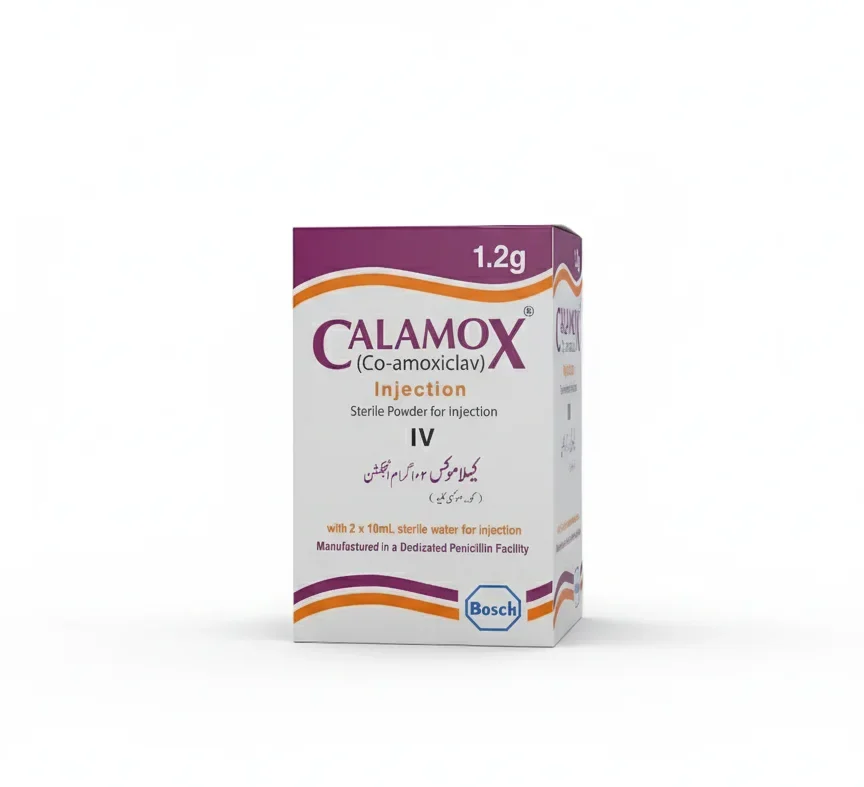
Calamox IV Injection 1.2g
Calamox 1.2 Injection is a broad-spectrum combination antibiotic containing Amoxicillin and Clavulanic Acid. Calamox 1.2 is commonly used in clinical and hospital settings where rapid and reliable antibiotic therapy is required.
Original price was: ₨ 299.₨ 270Current price is: ₨ 270.
| Manufacturer | Local pharmaceutical manufacturer |
| Active Ingredients | Amoxicillin Sodium and Clavulanic Acid (as Potassium Clavulanate) |
| Medicine Strength | 1.2g per vial (1g Amoxicillin + 0.2g Clavulanic Acid) |
| Formulation | Powder for Solution for Intravenous Injection/Infusion |
| Number Per Pack | Typically 1 vial per pack |
| Requires Prescription? | Yes (Hospital/Physician supervision required) |
| Generics | Amoxicillin/Clavulanic Acid |
Calamox 1.2 Ingredients and Usage
The combination consists of Amoxicillin, a broad-spectrum penicillin antibiotic, and Clavulanic Acid, a beta-lactamase inhibitor that prevents bacterial resistance. The powder must be reconstituted with sterile water or a compatible IV fluid before administration.
Calamox 1.2 Injection is indicated for the treatment of:
- Respiratory Tract Infections: Pneumonia, bronchitis, sinusitis
- Skin and Soft Tissue Infections: Cellulitis, wound infections, surgical site infections
- Bone and Joint Infections: Osteomyelitis and septic arthritis
- Urinary Tract Infections: Complicated UTIs and pyelonephritis
- Intra-abdominal Infections: Peritonitis, biliary tract infections
- Mixed or Polymicrobial Infections: Infections caused by organisms known to produce beta-lactamase
How Does Calamox 1.2 Work?
Calamox 1.2 works through a synergistic mechanism that enhances antibacterial action:
- Inhibition of Cell Wall Synthesis: Amoxicillin binds to PBPs, disrupting bacterial cell wall construction.
- Beta-Lactamase Inhibition: Clavulanic acid neutralizes beta-lactamase enzymes, preventing amoxicillin breakdown.
- Broadened Spectrum: Effective against resistant strains such as H. influenzae, E. coli, S. aureus (non-MRSA), and anaerobes.
- Bactericidal Effect: Leads to bacterial lysis and death.
Calamox 1.2 Side Effects and Warnings
Common side effects include gastrointestinal upset, diarrhea, nausea, vomiting, and mild injection site pain or inflammation.
Serious Warnings and Precautions:
- Hypersensitivity Reactions: Severe allergic reactions may occur, especially in patients allergic to penicillins or cephalosporins.
- C. difficile-Associated Diarrhea: Ranges from mild diarrhea to life-threatening colitis.
- Liver Dysfunction: Rare cases of cholestatic jaundice and hepatitis have been reported.
- Renal Impairment: Dose adjustment is required in patients with decreased kidney function.
- Administration Guidance: Should be given slowly via IV injection over 3–4 minutes or as IV infusion over 15–30 minutes.
Calamox 1.2 Storage Conditions
Proper storage ensures stability and effectiveness:
- Store vials below 25°C (77°F)
- Protect from heat, moisture, and direct light
- Use reconstituted solution immediately when possible
- If stored, keep refrigerated and use within 6–8 hours (as per manufacturer guidelines)
- Do not freeze reconstituted solution
- Discard solution if cloudy, discolored, or containing particles