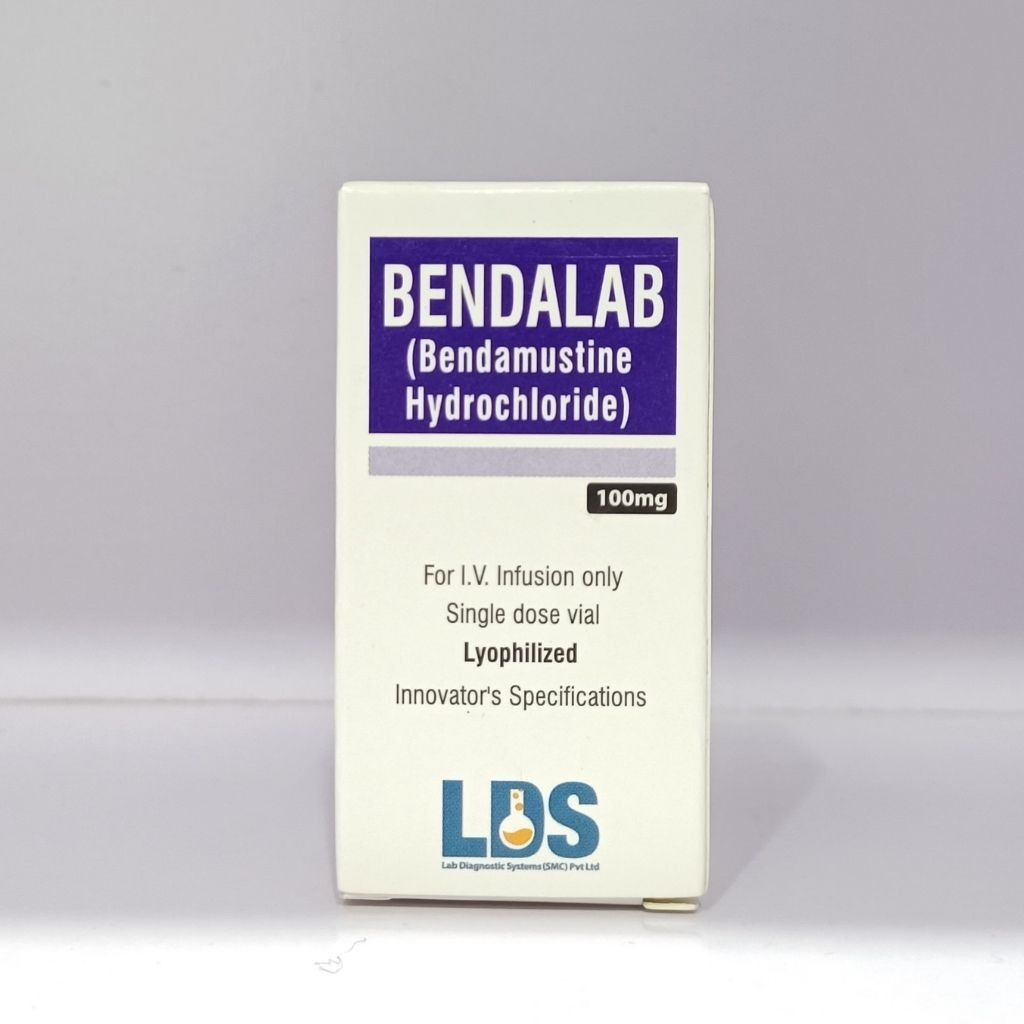
Bendalab Injection 100mg (Bendamustine HCL)
Bendalab 100mg Injection contains bendamustine hydrochloride, an alkylating chemotherapy agent used for chronic lymphocytic leukemia and indolent B-cell non-Hodgkin lymphoma. Buy Bendalab 100mg Injection at PakMeds with a valid prescription for genuine LDS Pharma stock.
Overview
A qualified oncology team administers it as an intravenous infusion over 30 to 60 minutes on specific days of each treatment cycle.
Manufacturer | LDS Pharma (Lab Diagnostic Systems) |
|---|---|
Active Ingredient(s) | Bendamustine Hydrochloride |
Strength | 100mg |
Pack Size | 1 vial |
Prescription Required | Yes |
Generic Name(s) | Bendamustine |
Bendalab 100mg Injection Ingredients and Usage
Bendalab 100mg Injection contains bendamustine hydrochloride, a bifunctional alkylating agent belonging to the nitrogen mustard anticancer drug class. Oncologists prescribe it for chronic lymphocytic leukemia and for indolent B-cell non-Hodgkin lymphoma that has progressed during or shortly after treatment with rituximab or a rituximab containing regimen.
Bendalab 100mg Injection is typically given on two consecutive days every 21 to 28 days, either alone or combined with other agents such as rituximab. A specialist experienced in chemotherapy administration must supervise treatment throughout.
How Does Bendalab 100mg Injection Work?
Bendamustine forms crosslinks between DNA strands within cancer cells, physically preventing the DNA from separating during replication. It also inhibits DNA and RNA transcription, disrupting the machinery cells need to produce proteins.
By damaging DNA through multiple mechanisms, Bendalab 100mg Injection blocks the division of rapidly growing cancer cells and triggers cell death. This dual mode of action distinguishes it from single-mechanism alkylating agents and contributes to its activity in both leukemia and lymphoma.
Bendalab 100mg Injection Side Effects
Bendalab 100mg Injection commonly causes blood count changes and digestive side effects. Blood counts typically reach their lowest point in the third week of treatment.
Low white blood cell, red blood cell, and platelet counts
Nausea and vomiting
Fatigue
Fever and chills
Loss of appetite
Headache
Injection site reactions
Warnings
Bendalab 100mg Injection can cause severe myelosuppression that has resulted in fatal infections; complete blood counts must be monitored weekly, particularly during the third week of each cycle.
Tumor lysis syndrome can occur, typically within the first treatment cycle, and may lead to acute kidney failure and death without prompt intervention; vigorous hydration and close monitoring of blood chemistry are required.
Severe infusion reactions, including anaphylaxis, can occur, more often in the second and later treatment cycles; monitor closely and premedicate in subsequent cycles if milder reactions occur.
Serious skin reactions, including Stevens-Johnson syndrome and toxic epidermal necrolysis, have been reported and can be fatal, especially when bendamustine is combined with allopurinol.
Bendalab 100mg Injection has been linked to secondary cancers, including myelodysplastic syndrome, leukemia, and skin cancers; periodic dermatologic evaluation is recommended.
Extravasation during infusion can cause significant local tissue injury; ensure good venous access and monitor the injection site closely.
Bendalab 100mg Injection can cause fetal harm and may reduce male fertility; effective contraception is required during treatment, and men should discuss fertility preservation with their doctor.
Bendalab 100mg Injection Storage Conditions
Store Bendalab 100mg Injection refrigerated between 2°C and 8°C. Before use, bring the vial to room temperature and inspect for any visible particles; do not use if particles are present. Store this medicine out of reach of children and ensure only trained healthcare staff handle preparation and administration.
Customer Reviews
No reviews yet. Be the first to review this product!
Login to write a review