
No products in the cart.
-55%
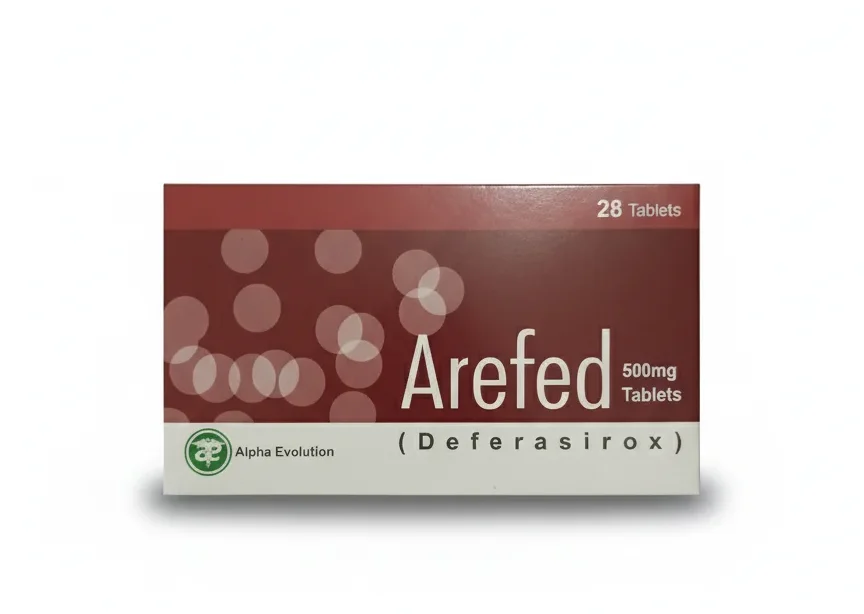
Arefed 500mg Tab 28`s
Arefed 500 mg Dispersible Tablet contains Deferasirox, an essential iron chelating agent used daily to treat chronic iron overload (hemosiderosis). Procure this high-alert, prescription-only hematology medication at PakMeds with a valid specialist prescription.
Original price was: ₨ 14,601.₨ 6,500Current price is: ₨ 6,500.
| Manufacturer | Typically a local or regional pharmaceutical company (e.g., Alpha Evolution, Ar’af Pharma) |
| Active Ingredients | Deferasirox |
| Medicine Strength | 500 mg per Dispersible Tablet |
| Number Per Pack | Varies (e.g., 30 Tablets) |
| Requires Prescription? | Yes (Hematologist/Specialist Prescription) |
| Generics | Deferasirox (e.g., Exjade) |
Arefed 500 mg Ingredients and Usage
The active ingredient is Deferasirox, an oral chelating agent. The 500 mg dispersible tablet is designed to be fully dispersed in water or a small amount of non-carbonated drink (like apple or orange juice) to form an oral suspension before consumption. It must not be chewed or swallowed whole.
Arefed 500 mg is clinically used for:
- Transfusional Iron Overload: Treating chronic iron accumulation resulting from repeated blood transfusions in patients aged 2 years and older.
- Non-Transfusion-Dependent Thalassemia (NTDT): Treating chronic iron overload associated with thalassemia in patients aged 10 years and older who do not require regular transfusions.
How Does Arefed Work?
Deferasirox acts as a selective, oral chelating agent with a high affinity for iron. The mechanism is:
- Iron Chelation: Deferasirox binds specifically to the excess free Fe³⁺ (ferric iron) that accumulates in the body tissues due to constant blood cell breakdown from transfusions.
- Excretion: The resulting iron-Deferasirox complex is stable and is primarily excreted from the body via the faeces (stool), rather than the urine.
- Organ Protection: This process reduces the body’s overall iron burden, which is critical for preventing iron toxicity that can lead to heart failure, cirrhosis, and endocrine dysfunction. The dosage is highly individualized based on serum ferritin levels and patient weight.
Arefed 500 mg Side Effects and Warnings
Due to the complexity of iron chelation and its impact on the body, patients taking Deferasirox must undergo regular monitoring (e.g., serum ferritin, liver function, and kidney function tests) every 4 weeks.
Black Box Warnings and Critical Precautions:
- Renal (Kidney) Toxicity: Deferasirox can cause or worsen acute kidney injury. Dose adjustment or interruption is required if serum creatinine significantly increases. Monitoring of creatinine clearance is vital.
- Hepatic (Liver) Toxicity: Severe, potentially fatal, liver injury, including acute hepatic failure, has been reported. Liver function tests (ALT/AST) must be monitored closely, and treatment may need to be stopped if liver enzymes rise significantly.
- Gastrointestinal Hemorrhage: Serious GI bleeding, sometimes fatal, has been reported, particularly in elderly patients or those with existing risk factors. Patients should report any signs of bleeding immediately (e.g., coffee-ground vomit, black stools).
- Severe Skin Reactions: Life-threatening skin reactions (like Stevens-Johnson syndrome, SJS) are rare but possible. If a rash progresses, treatment should be discontinued.
Arefed 500 mg Storage Conditions
Arefed Dispersible Tablets should be stored under controlled conditions, and proper preparation is critical for efficacy:
- Store the tablets at controlled room temperature, typically between 20°C and 25°C (68°F and 77°F).
- Keep the tablets in the original packaging, protected from moisture.
- Preparation: The tablet must be fully dispersed by stirring in a small amount of water or orange/apple juice until a fine suspension is achieved. The suspension must be consumed immediately and completely.
- Do not chew or swallow the dispersible tablet whole. Do not dissolve in carbonated drinks or milk.
Reviews
There are no reviews yet.
(0 customer reviews)