
No products in the cart.
-31%
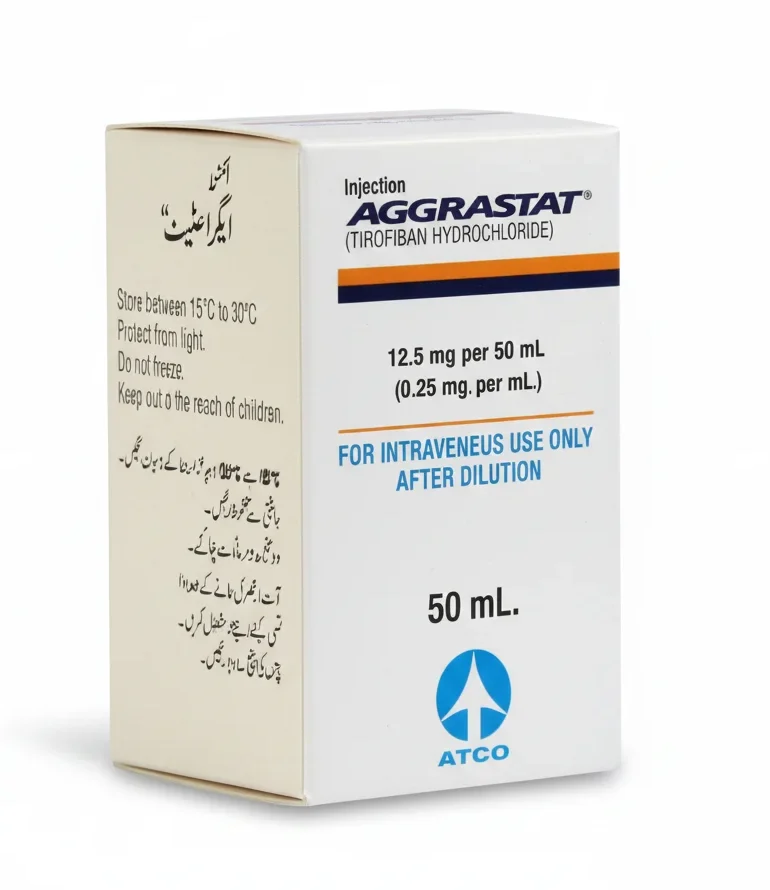
Aggrastat 12.5mg/50ml IV Inj. 1`s
Aggrastat Injection (Tirofiban) is a powerful, intravenous antiplatelet medication used in the management of Non-ST Elevation Acute Coronary Syndrome (NSTE-ACS), which includes unstable angina and certain types of heart attack. Buy Aggrastat online with a prescription-only at PakMeds.
Original price was: ₨ 36,200.₨ 25,000Current price is: ₨ 25,000.
| Manufacturer | Medicure Pharma / ADVANZ Pharma (Internationally); Local Marketers (e.g., ATCO Lab) |
| Active Ingredients | Tirofiban Hydrochloride |
| Medicine Strength | 50 mcg/mL (Premixed Solution for Infusion) or 250 mcg/mL (Concentrate/Bolus Vial) |
| Number Per Pack | Varies (e.g., 100 mL bag, 250 mL bag, or 15 mL bolus vial) |
| Requires Prescription? | Yes (Hospital/Cardiologist use only) |
| Generics | Tirofiban |
Aggrastat Ingredients and Usage
The active ingredient in Aggrastat is Tirofiban Hydrochloride, a non-peptide molecule belonging to the class of glycoprotein (GP) IIb/IIIa inhibitors. It is supplied as a sterile solution for intravenous infusion, often premixed in saline.
Aggrastat is clinically indicated to reduce the rate of thrombotic cardiovascular events (death, myocardial infarction, or refractory ischemia) in patients with Non-ST Elevation Acute Coronary Syndrome (NSTE-ACS). It is also used during Percutaneous Coronary Intervention (PCI) procedures (like angioplasty and stenting) to prevent clot formation during the procedure.
How Does Aggrastat Work?
Aggrastat (Tirofiban) is a highly effective antiplatelet agent with a rapid onset and offset of action. It prevents platelets from sticking together to form a thrombus (blood clot) by targeting the final step of platelet aggregation:
- Targeted Receptor Blockade: Tirofiban is a reversible antagonist of the Glycoprotein (GP) IIb/IIIa receptor. This receptor is the most abundant receptor on the surface of platelets.
- Fibrinogen Inhibition: The GP IIb/IIIa receptor is the crucial binding site for Fibrinogen, a protein that acts as the “bridge” to link platelets together, forming a clot.
- Platelet Aggregation Inhibition: By binding to the GP IIb/IIIa receptor, Tirofiban blocks Fibrinogen from attaching. This effectively prevents the platelets from aggregating and forming a pathological clot in the artery, thus rapidly re-establishing blood flow to the heart muscle.
Aggrastat Side Effects and Warnings
The most significant and common adverse effect of Aggrastat, due to its antiplatelet activity, is bleeding. Patients are closely monitored for signs of bleeding, particularly at puncture sites and internally. Common side effects may include:
- Minor Bleeding (e.g., nosebleeds, bleeding gums)
- Dizziness, Headache
- Nausea, Sweating
- Bradycardia (slow heart rate)
Serious Warnings and Contraindications:
- Major Bleeding Risk: Aggrastat can cause serious, sometimes fatal, bleeding events, including gastrointestinal, retroperitoneal, and intracranial hemorrhage. The risk is increased when used with other anticoagulants (e.g., heparin) or antiplatelet drugs (e.g., aspirin). Close monitoring of platelet counts and coagulation parameters is mandatory.
- Thrombocytopenia: Severe and sudden decreases in platelet count (Thrombocytopenia, < 50,000 cells/mm³) have been reported and may require immediate discontinuation of the infusion.
- Contraindications: Aggrastat is strictly contraindicated in patients with: active internal bleeding; a history of bleeding disorders; a history of stroke within the last 30 days or any history of hemorrhagic stroke; or a history of thrombocytopenia following previous Tirofiban therapy.
Aggrastat Storage Conditions
Aggrastat is a sterile, ready-to-use solution that requires specific handling and storage in a clinical environment:
- Store the unopened bags or vials at controlled room temperature, typically between 20°C and 25°C (68°F and 77°F). Do not freeze.
- Protect from Light: Keep the product in the original carton until the time of use.
- Stability: Aggrastat is a premixed solution and does not require dilution for infusion in the standard bag sizes (50 mcg/mL). Inspect the solution before use; it should be clear and colorless.
- Keep out of the reach of children.